Clearing Space, Arranging Being
“We have fear, and we don’t know how to hold it,” Naimah Hassan said to me once. I met Naimah while I was hiring artists to teach workshops as Interim Director at The Creative Center; her wisdom, rooted in her Kadampa Buddhist practice and her experience as an improv teacher in public schools, made her insights unique and proven. Fear was expressed to me by participants in Creative Center programs about financing treatment plans, about fading beauty, about abandoning one’s children in death, about the work of life left incomplete. Fear is energy that comes to us from outside forces. If it sits in your body, it can make you sick.
When I was spending most of my time physically at home and alone during COVID while directing daily operations, Naimah was able to help me manage my anxiety at its peak, helping me realize home is a place we make, and that makes us, again and again and again. On the phone, she had me counting rocks, holding them to keep me from mangling my cuticles, helping me regulate into sleep instead of pacing my apartment all night. This simple act of clearing, of making space in my day for a grounding ritual where I might hold some small fragments of the earth in my hands, became a tangible way to transform fear into presence or absence. This clearing sharpened my awareness of connection and disconnection, exposing the tension between what I wanted to do and what I could actually do. With Naimah’s guidance, arranging the rocks allowed me to make space for calm, despite the uncertainty and isolation. I could hold both solitude and new forms of connection. My sense of self was remade as we built toward community.
Naimah’s insights into the practice of detachment were as much for the mind as they were for the body. “We forget people… a grief that starts when the door closes, so we have to always be asking ourselves, are you the only person suffering? As artists, we are spiritual healers; we are offering participants a moment in their lives to really understand that they matter. We have to try to locate the feeling of that suffering in our bodies and translate it to a point of connection.”
We cannot separate the human heart from its environment; we are organically connected to the world, with our inner lives both shaping and being shaped by our surroundings. Physical spaces shape our experiences, especially in hospitals where the environment deeply influences healing. A feeling of belonging in community depends on agency, participation, linking our inner and outer worlds. With intention, this can be provided consistently by artists. In-patient units, where people have little choice in how they live, can intensify feelings of fragmentation and disruption. When I first started working at The Creative Center, I read Florence Nightingale’s Notes on Nursing. Her writing, penned in 1859 and still largely applicable today, emphasizes practicalities on how to keep rooms and furnishings to promote healing. This begins with simplicity so rooms can be easily cleaned, but Nightingale also notes that variety is vital for healing. Spaces must be clear, but not sterile. “Oh, there’s plenty of culture here—another word that works is clutter,” a storied organizer with The Franklin Furnace artist collective shared. One of the public programs that Naimah and I presented, with support from Franklin Furnace, was impactful enough that we stay in touch. This experience reinforced a feeling that particularities of a place are continually negotiated and remade, not despite of but because of a desire to share tributes to both memories and new connections.
“As artists, we are spiritual healers; we are offering participants a moment in their lives to really understand that they matter.”
Naimah Hassan
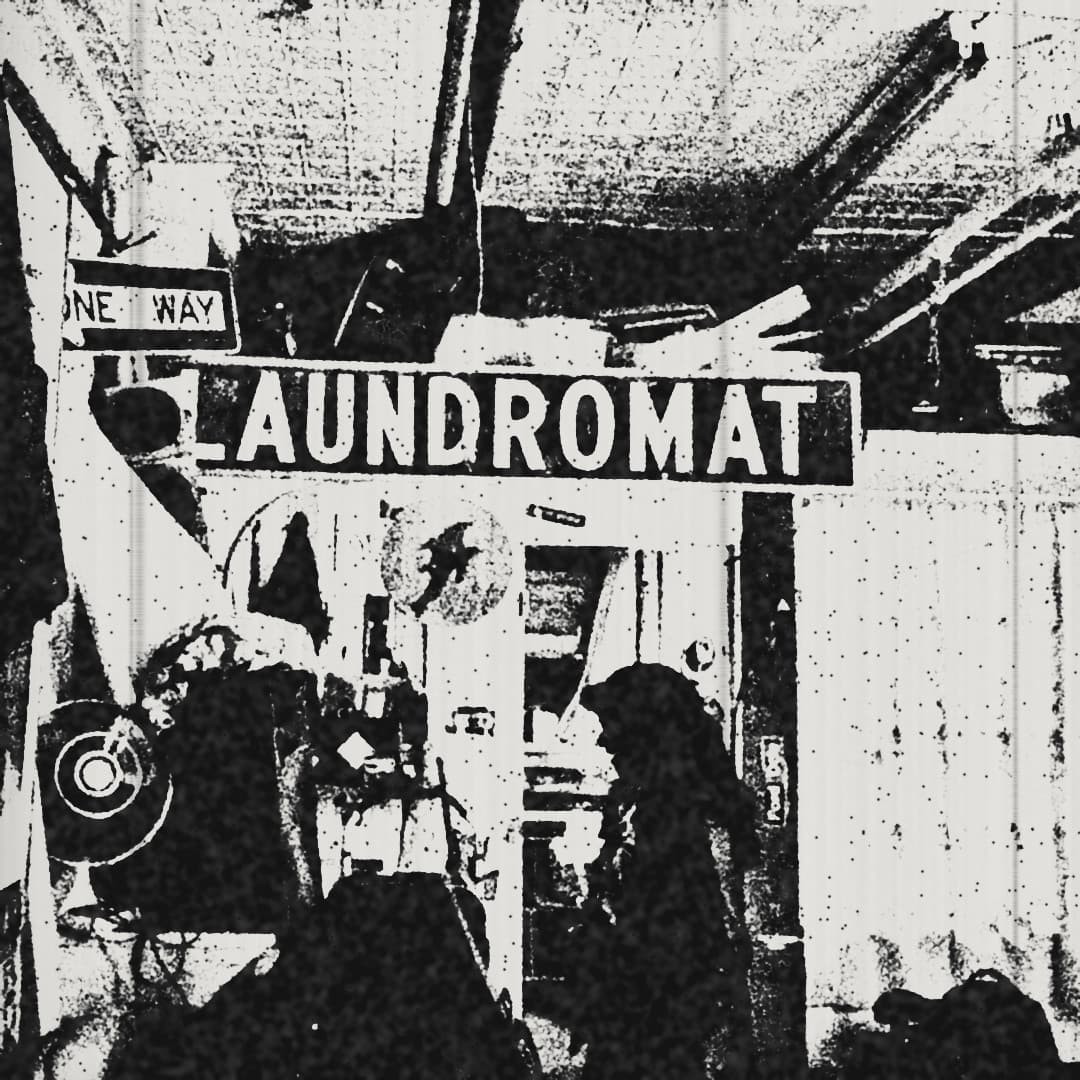
I am writing on the long couch at Brothers Wash & Dry in Maspeth, Queens, remembering my previous years pacing hospital hallways. Once a laundromat, now a music venue/art studio/meeting space, I’m most often here to see live music among a collage of gifts, leavings arranged by a storyteller named Sampson Dahl. Sampson grew up on a commune in Texas and thrives on trying something new including living in the Laundromat. “Chaos is not looking at you,” he says, when I ask him how he feels in the Laundromat. “Just because it’s chaotic doesn’t mean it’s nonsensical.” The space feels open despite its fullness, as objects and people—many of them artists—gather forming a vibrant, reciprocal community. I feel transported when I am in the Laundromat, though it is the opposite of clear when we interpret clear as empty.
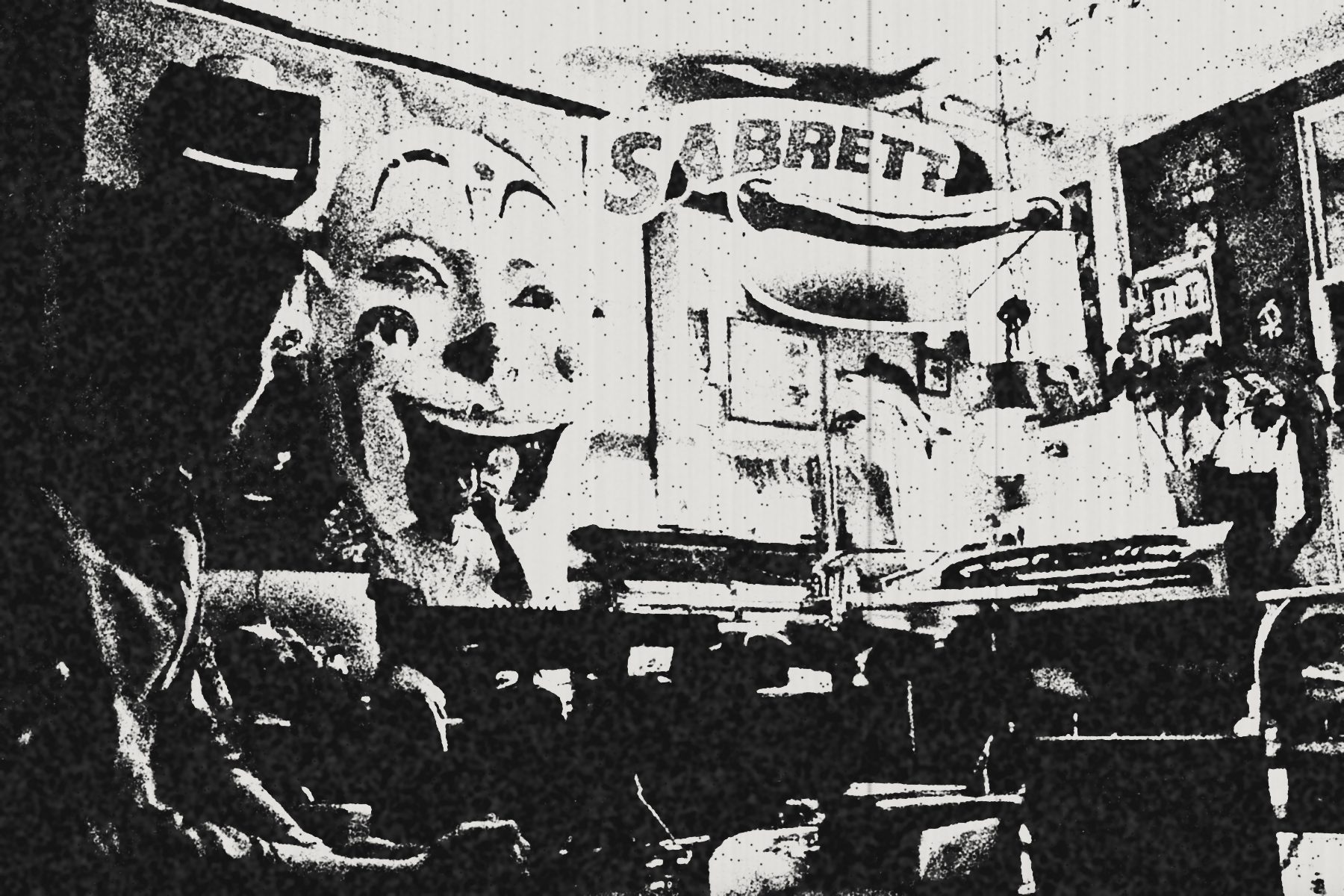
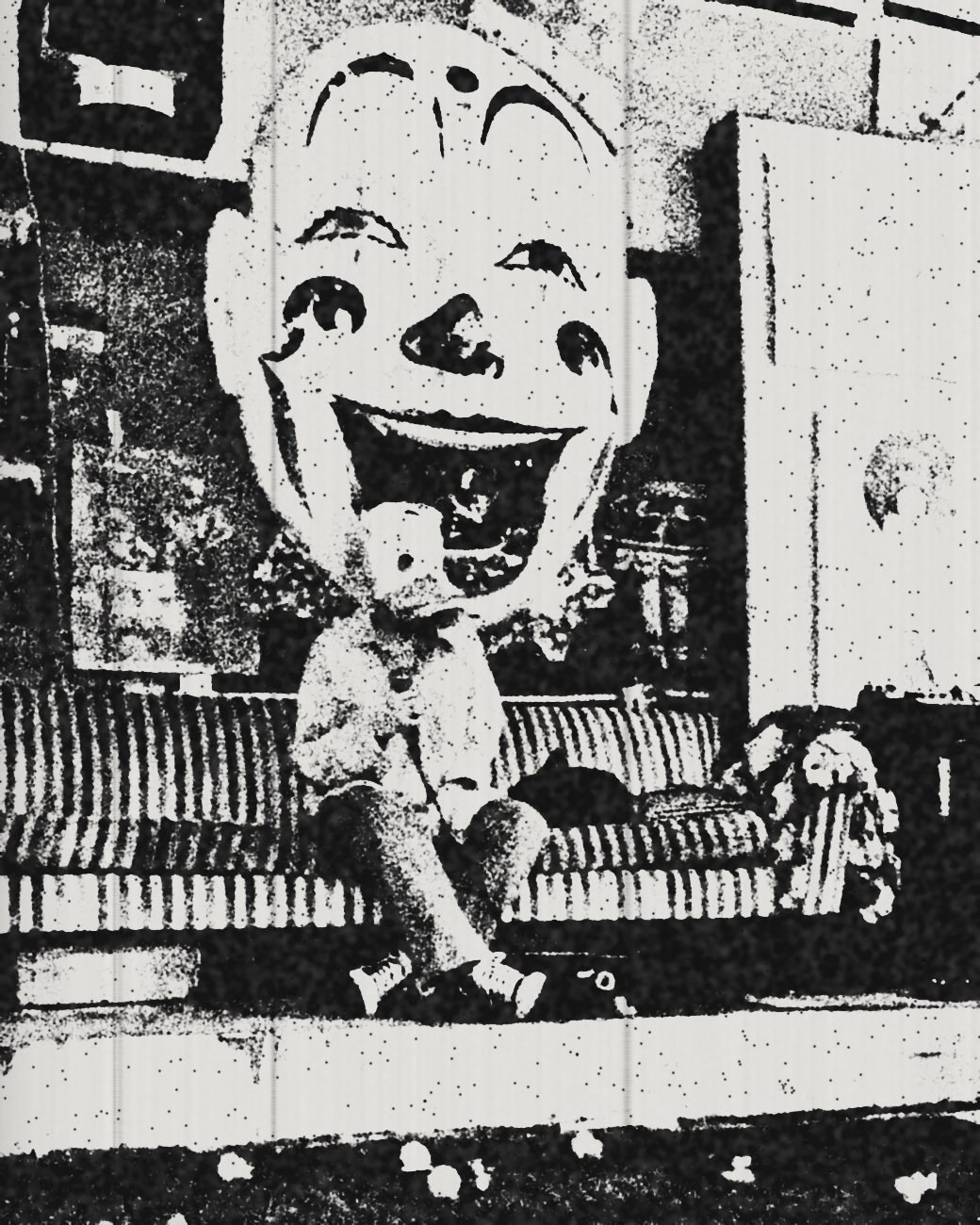
It’s hard to say what the centerpiece of the showroom is: an electric organ, a giant clown face mounted, mouth agape, behind the couch where I write, or a three-dimensional hand about the size of a bicycle, suspended by a rope suited for an old schooner. A sole working washing machine and the royal blue awning remain from the original business, practical tributes to what has been here. The power of an emotionally evocative space was also reflected in Creaturgy. Environments for creative work might include more “small tchotchkes around,” as one artist put it, “given by dear friends from across the world. Rocks, plushies, stickers, photos… when I need help, I look at these elements and feel the moment I received them. This helps me feel supported, and the ideas flow more easily.” Clearing space incentivizes movement, yet these objects motivate us through reminders of personal connection. Clear connection to others is a gift all people can attain.
On Earth, we live with conditions: gravity, grace, one another. Caring for an environment considers the conditions in which living takes place. With Creaturgy, we discovered over time that people who lead with creative thinking connect into embodied space first by looking deeply at ourselves, then also making time for reflection together. The value and depth of this care is mitigated by attention, time, and understanding what the collective standard of care is. These are definitions to be determined in relationships, with each arrangement co-created. I’m tempted to begin my personal definition with “leave it better than you found it.” Hospital Rooms, a UK-based Arts in Health organization we collaborated with at The Creative Center, began with the impetus to improve space. Founder Tim Shaw was struck by the environment of the secure mental health unit when he visited a loved one receiving care there. “It was bare and clinical and inhumane,” Shaw shared. Clearing, whether of space or the mind, amplifies the relationship between what we want to do and what we actually do. It is not about emptiness.
Working previously with fine art, Tim Shaw conceived of Hospital Rooms to hire artists to transform mental health units. It took years to have the staff and capacity to consider how permanent art interventions might transform hospital spaces entirely. This was how Harun Morrison was hired. Having worked in healthcare himself, Harun noted that focusing only on patients can be counterproductive when staff are also marred by the same environment. The staff, Harun shared, are the full embodiment of the impact of that environment.
“My whole adult life I’ve only ever lived in open-ended environments, taking in people all the time,” says Sampson in the Wash & Dry. He’s open about his life being one of constant adjustment, recalling his college years in Chicago where he lived in a warehouse, hosting shows and parties. The warehouse, he says, invited a particularly frivolous style of living, but one where he learned how to work with who and what was already present. “I built my life around the circumstances, around potential disasters, and that made fewer disasters, less stress.” Clearing amplifies our awareness of both connection and disconnection, bringing into focus what remains after we remove what is unnecessary. In considering this internal and external clearing, we can choose to evoke mindfulness as well as practices of renewal like controlled burns that require the removal of elements.
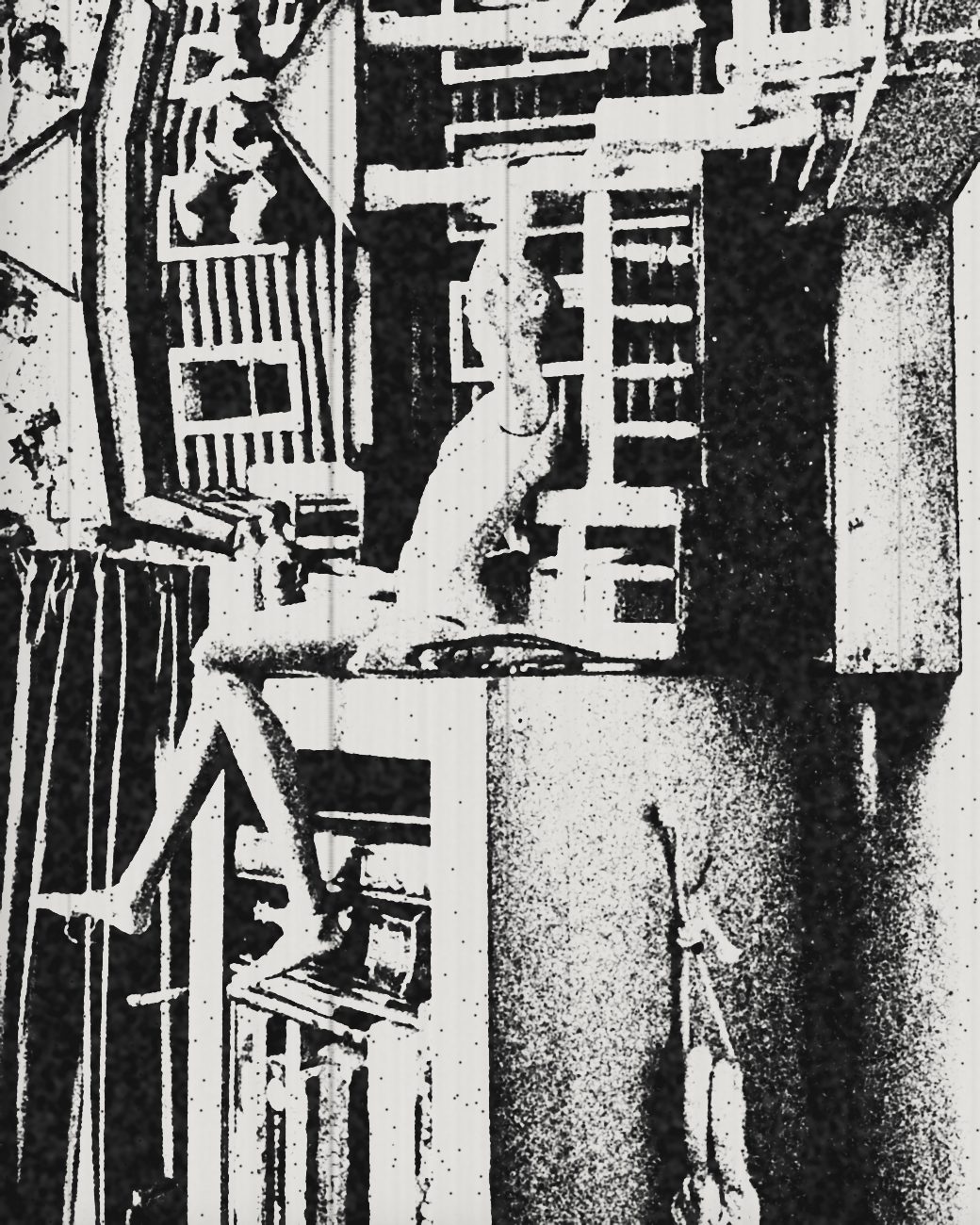
Sampson moved out of the Laundromat in the fall of 2024, and the space was transferred into the collective stewardship of five artists who split the rent, book the space for events, and maintain it. On a shelf above the one remaining laundry machine, a porcelain doll dangles seven feet above the concrete floor. There have been thoughts about moving it many times, but after years in the space, the artists no longer feel the urge. There is an ease with allowing things to be precarious, noting in order to do so you have to care for the precarity. The ecosystem demands you care for the precarity, not disturbing objects preemptively but watching as you might watch your thoughts pass in meditation.
I still feel deeply present with the memory of Naimah Hassan. Her abrupt diagnosis of liver failure and cancer came as we were planning a workshop to invite people with chronic illness to uncover their superpower; it never shook her belief that all people have a superpower, or her desire to translate that, teaching people to make use of it through improvisation. I still think about this, the superpower of centering what I believe with my whole heart in my creations. Naimah recalled aiding others approaching end of life during an Arts in Health training hosted at The Creative Center. She remembered working with a patient and one day, understanding this person’s life was coming to an end, felt a responsibility: “to give them a smile in their hearts and as artists, and as humans, to recognize that we will all be in this bed one day.” While all people can cultivate the ability to see themselves in one another, artists can cultivate perception in a unique, connective way. When Harun Morrison was first asked to reimagine a severely sterile unit in the hospital as part of Hospital Rooms, he found so much positivity in filling the space with great art, subverting the reality of it, not just at the whims of his own taste but in connection with people in the environment whose insights uplifted the re-creation.
Clearing is its own kind of grace: the act of making space, not only for what is, but for what could be, a diligence to all who might arrive imperfectly there. As the work of living and inviting people into The Brothers Wash & Dry deepened, Sampson reflects he began to “design the space to be as disarming as possible. More hard, gnarly dudes would come in to investigate, and the space shattered their expectations.” He recalls how this changed after COVID, as people returned to work in Queens. “Around 2pm, factory workers would be coming outside to have lunch, rearranging the furniture on the sidewalk. That feels really part and parcel to the creative ecosystem. It’s not about desire, it’s about need. The layout of everything is informed by need,” he says.
Sampson could have tailored the space exactly to his needs, but instead, he left room for the unexpected, the grace of opening—clearing space not for oneself, but for others to be. This is what made more and more artists feel at ease moving into the intimate space of the Laundromat; it was just like getting to know Sampson, getting to know him as part of the environment, getting to know him in relation to others in the space he cultivated. He understands that the best artists can be to their community is open—with space available to meet people where they are.
Creating an open mental landscape, one artist summarized as “retreat space where my human needs are being satisfied, and I have time for continuous thought.” Reading Gravity and Grace, and understanding the clearing of consciousness, its relational nature, Simone Weil writes: “Creation is composed of the descending movement of gravity, the ascending movement of grace… Whereas gravity is the work of creation, the work of grace consists of ‘decreating’ us.” Weil seems to propose that we can live in paradox by activating one of our greatest capacities: paying attention. “All the natural movements of the Soul are controlled by laws comparable to those of physical gravity. Grace is the only exception… To lower oneself is to rise in the domain of moral gravity. Moral gravity makes us fall towards the heights.” In clearing, we are not just emptying out. We connect with our senses, prepare to invite people in, and summon new possibilities.
From Creaturgy
Despite universal creative potential, many individuals feel disconnected from their own creative agency and lack tools to integrate creativity into daily life and community-building, especially where institutional systems fail to support holistic well-being.
Creaturgy, a polyvocal field guide, synthesizes qualitative data from an 11-question survey completed by 130 artists worldwide, complemented by in-depth case studies, analyses of artworks and albums, community profiles, and the author’s reflective narrative as director of The Creative Center, where she witnessed creativity’s potential to meet community needs, particularly where systems such as for-profit healthcare fall short.
Themes in the survey responses indicate that creative engagement is a fundamental human capacity accessible to all, not just artists, and that regular creative practice fosters agency, and commitment to learning. Based on interview dialogues with artists, readers explore different perspectives on choice, patience, and collaboration to help transform frustration and grief into renewed purpose, while building supportive environments and new cultures.